
Healthy Grocery Shopping on a Budget
Eating Well Without Overspending
Eating healthy can sometimes feel expensive — especially when grocery prices continue to rise. But healthy eating doesn’t have to mean buying the most expensive products or shopping at specialty stores. With a little planning and a few smart strategies, families can eat nutritious meals while staying within their budget.
At Big River Grocery, we believe everyone deserves access to fresh, affordable food. Here are some practical ways to shop healthier while making your grocery dollars stretch further.
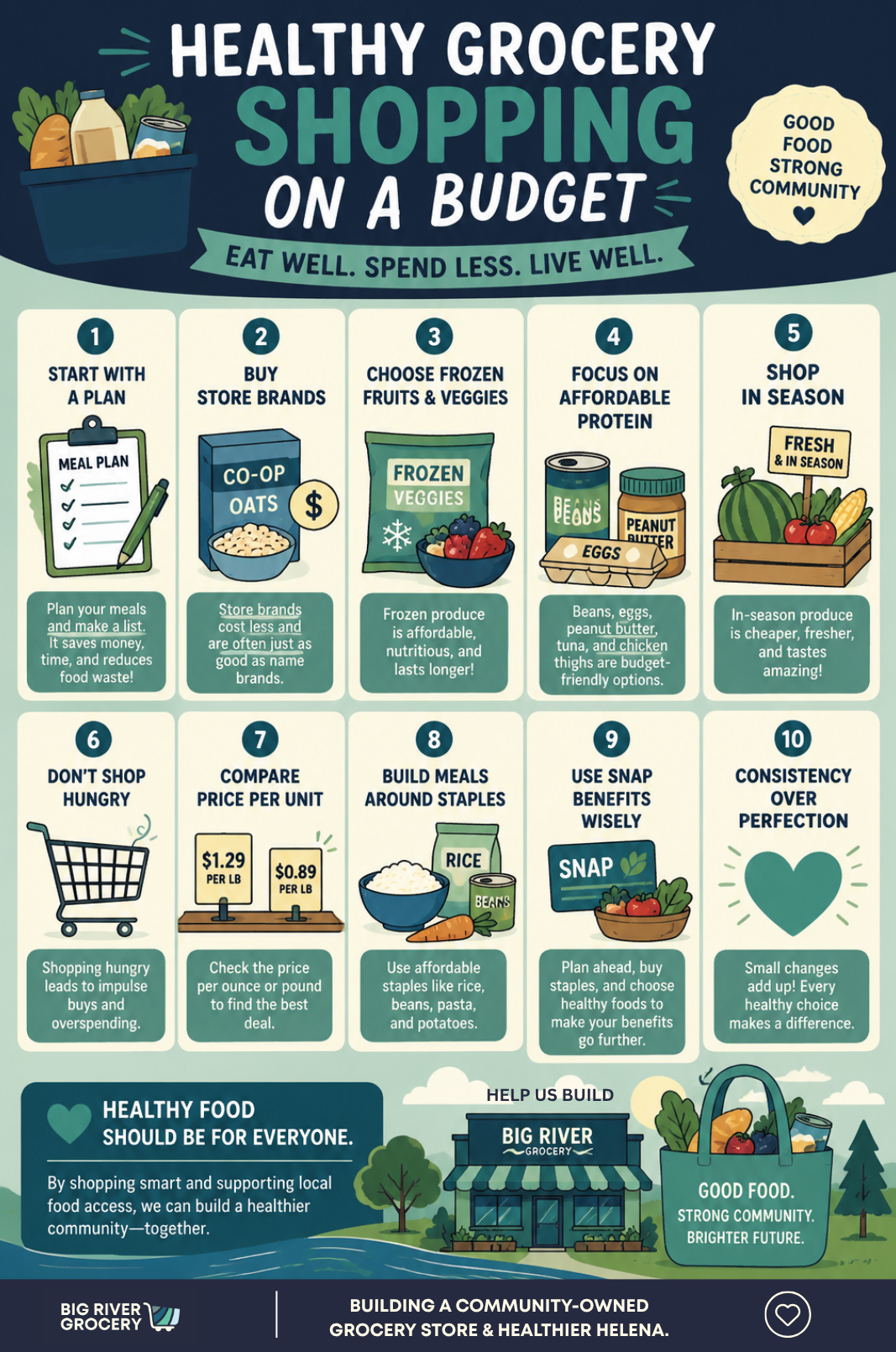
1. Start With a Plan Before You Shop
One of the easiest ways to save money is to make a grocery list before going to the store.
Planning meals ahead of time helps reduce:
Impulse purchases
Food waste
Multiple trips to the store
For example, instead of randomly buying ingredients, plan meals that use similar items throughout the week.
Example:
If you buy:
Bell peppers
Rice
Chicken
Black beans
You can use them for:
Chicken and rice bowls
Fajitas
Soup
Burrito bowls
Using ingredients multiple ways helps stretch your budget.
2. Buy Store Brands
Many store-brand items are just as good as name brands but cost much less.
Products like:
Oats
Rice
Frozen vegetables
Canned beans
Pasta
Peanut butter
are often significantly cheaper under generic labels.
Example:
A name-brand cereal might cost $6, while the store-brand version costs $3.50. Over time, those savings add up.
3. Frozen Fruits and Vegetables Are Your Friend
Fresh produce is great, but frozen fruits and vegetables are often:
More affordable
Last longer
Equally nutritious
Frozen produce also helps reduce food waste because you can use only what you need.
Budget-Friendly Frozen Staples:
Broccoli
Mixed vegetables
Spinach
Berries
Stir-fry blends
Example:
Instead of spending $5 on fresh berries that spoil quickly, a frozen bag may cost the same and last several weeks.
4. Focus on Affordable Protein Sources
Protein is important, but it doesn’t always have to come from expensive meat.
Affordable protein options include:
Beans
Eggs
Peanut butter
Tuna
Lentils
Greek yogurt
Chicken thighs instead of chicken breasts
Example:
A pot of red beans and rice can feed a family for multiple meals at a low cost while still providing protein and fiber.
5. Shop What’s In Season
Produce that is in season is usually:
Cheaper
Fresher
Better tasting
Seasonal Examples:
Spring:
Strawberries
Lettuce
Summer:
Tomatoes
Watermelon
Corn
Fall:
Sweet potatoes
Apples
Winter:
Cabbage
Carrots
Buying in-season produce can significantly lower your grocery bill.
6. Don’t Shop Hungry
It sounds simple, but shopping while hungry often leads to:
More impulse purchases
More snacks and convenience foods
Overspending
Even eating a small snack before shopping can help you stick to your list.
7. Compare Price Per Unit
Sometimes larger packages are a better deal — but not always.
Look at the shelf label for:
Price per ounce
Price per pound
Price per item
This helps determine which option is actually cheaper.
Example:
A large bag of rice may cost more upfront but provide double the servings for only a few extra dollars.
8. Build Meals Around Low-Cost Staples
Healthy eating becomes more affordable when meals are built around inexpensive basics.
Affordable Staples:
Rice
Beans
Pasta
Potatoes
Oats
Frozen vegetables
Then add flavor and variety with:
Spices
Sauces
Seasonal vegetables
Example Budget Meal:
Vegetable stir-fry with rice:
Rice
Frozen vegetables
Eggs or chicken
Soy sauce
Healthy, filling, and affordable.
9. Use SNAP Benefits Wisely
SNAP benefits can go a long way with thoughtful shopping.
Helpful tips include:
Buying staple ingredients instead of prepackaged meals
Purchasing frozen produce
Planning meals before shopping
Buying items with multiple uses
Many communities also offer programs that stretch SNAP dollars at farmers markets and food programs.
10. Healthy Eating Is About Consistency, Not Perfection
Healthy grocery shopping doesn’t mean every meal has to be perfect.
Small changes matter:
Drinking more water
Cooking at home more often
Adding vegetables to meals
Choosing whole foods when possible
Over time, these habits can improve health while also helping families save money.
Building Healthier Communities Together
Access to affordable, healthy food is important for every community. That’s one reason Big River Grocery is working to bring a community-owned grocery store to Helena.
Healthy food should not feel out of reach.
By learning practical shopping habits and supporting local food access efforts, we can help create a healthier future for everyone.
Together, we’re building something bigger than a grocery store — we’re building a healthier community.